- By Charlotte Brown
- October 13, 2026
Sustainable seafood sourcing for restaurants comes down to two things: knowing exactly where every fish on the menu came from, and buying from suppliers who can prove it. October is National Seafood Month, which makes it the right moment to put that sourcing story in front of guests.
Key Takeaways:
- Most U.S. seafood is imported, so traceability starts with your supplier.
- Ask every vendor for species, origin, catch or farm method, and chain of custody.
- Paris Gourmet products come with origin and method details you can use on the menu.
- Diners want sourcing info on the menu itself, not buried in a binder.
What Does Sustainably Sourced Seafood Mean for a Restaurant?
Sustainably sourced seafood is fish or shellfish harvested or farmed in a way that supports healthy stocks over time, with an origin and chain of custody that can be verified from boat or farm to plate. For a restaurant, that means buying from suppliers who can document where the seafood came from and how it was produced, so you can answer a guest's questions with confidence.
So is wild always better than farmed? Not necessarily. In 2024, the FAO's State of World Fisheries and Aquaculture 2024 reported that farming now produces just over half of the world's aquatic animal output. Both can be good choices. What matters is the specific fishery or farm behind the product.
The Two Pillars of Sustainable Seafood Sourcing |
||
|---|---|---|
|
Pillar |
What It Means |
What to Ask For |
|
Traceability |
Knowing the species, origin, and production method of every product |
Scientific species name, country and waters of origin, catch or farm method |
|
Documentation |
Proof that follows the product through every handoff |
Spec sheets, chain of custody records, and MSC, ASC, or BAP certification where it applies |
For restaurant buyers, sustainable seafood sourcing is less about choosing wild or farmed and more about knowing the specific source. A product is only as sustainable as the information behind it, so traceability and supplier documentation are the foundation of any credible seafood program.
Why Sustainable Sourcing Matters More Now
Sustainable sourcing has become a buying requirement because most seafood travels a long way before it reaches your kitchen, and guests expect you to know where it came from.
NOAA Fisheries' most recent Fisheries of the United States report, covering 2023, estimates that 80% of the seafood Americans ate that year was imported.
That long supply chain creates real pressure on the buying side:
- More handoffs, more risk. Every stop between boat and kitchen is a chance for origin details to get lost or the wrong species to get swapped in.
- Guests will pay for it. In 2025, Toast's restaurant sustainability survey found 72% of diners are willing to pay more at a restaurant that prioritizes sustainability.
- Menu claims need backup. If the menu says "Scottish salmon," you need paperwork that says the same thing.
With most U.S. seafood imported, restaurants depend on their suppliers for accurate origin information. Sourcing documentation protects menu claims, supports premium pricing, and gives staff confident answers when guests ask where their seafood comes from.
Our Take: Documentation protects more than your reputation. It's what makes a premium menu price defensible.
How Do You Build Traceability From Boat or Farm to Plate?
You build traceability by asking the same five questions about every seafood product you buy, and only working with suppliers who can answer all of them.
What Should You Ask Your Seafood Supplier?
If a supplier can't answer one of these, that's your signal to dig deeper or look elsewhere.
Seafood Supplier Traceability Checklist for Restaurants |
||
|---|---|---|
|
Question |
What a Good Answer Looks Like |
Why It Matters |
|
What's the species? |
Common and scientific name |
Prevents substitution of lookalike species |
|
Where did it come from? |
Country and specific waters or farm region |
Supports menu origin claims |
|
How was it caught or raised? |
Gear type or farm method |
Shows how the fishery or farm is managed |
|
Where was it processed? |
Facility location and method |
Closes gaps in the chain of custody |
|
What documentation comes with it? |
Spec sheet, plus MSC, ASC, or BAP certification where applicable |
Gives you proof if a guest or inspector asks |
Which Seafood Certifications Should You Look For?
Look for MSC on wild-caught seafood, and ASC or BAP on farmed seafood. Each one is backed by independent audits, so the label does part of the documentation work for you. Seafood Watch is different: it's a rating guide, not a certification, but it's a useful check on species that don't carry a label.
Seafood Certifications and Ratings |
|||
|---|---|---|---|
|
Label |
Applies To |
What It Covers |
What to Look For |
|
Wild-caught |
Fishery is independently assessed against the MSC Fisheries Standard for healthy stocks, ecosystem impact, and management; chain of custody keeps certified product separate through the supply chain |
Blue fish label and an MSC-C chain of custody number |
|
|
Farmed |
Farm is certified for environmental impact, responsibly sourced feed, and worker and community welfare |
Sea green ASC label |
|
|
Farmed |
Environmental responsibility, social accountability, food safety, and animal welfare, with annual third-party audits |
Star rating: 1 star for the processing plant, up to 4 stars when the plant, farm, hatchery, and feed mill are all certified |
|
|
Wild and farmed |
Science-based ratings of specific species, regions, and methods; not an audit of individual suppliers |
Best Choice (green), Certified (blue), Good Alternative (yellow), or Avoid (red) |
|
Our Take: A certification tells you a fishery or farm meets a standard. Your supplier's documentation tells you this case of product came from it.
What Does a Good Spec Sheet Look Like?
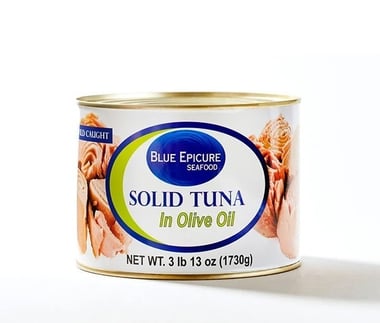
A good spec sheet answers most of those questions on its own. Here's how Blue Epicure's Solid Tuna in Olive Oil stacks up:
- Species: Wild skipjack tuna
- Origin: Cape Verde waters, North Atlantic
- Method: Wild-caught
- Processing: Hand-cut and packed in olive oil using traditional Portuguese methods
That's a complete traceability story in four lines, and every one of them can go straight onto a menu.
Why Do Distributor Relationships Matter?
Fewer handoffs mean fewer places for information to break down. A distributor who buys from known producers can pass along origin details that a multi-layer supply chain often loses.
At Paris Gourmet, we source from producers around the world and around the block, then make those products available through a network of independent distributors, keeping product details attached from producer to back door.
A restaurant's traceability is only as strong as its supplier's documentation. Asking every vendor the same five questions about species, origin, method, processing, and paperwork creates a consistent standard that supports menu claims and reduces the risk of mislabeled product reaching the plate.
Talk to your Paris Gourmet rep about origin and spec details for your seafood program →
How Do You Turn Sustainable Sourcing Into a Menu Selling Point?
Turn seafood sourcing into a selling point by naming the origin and method right in the menu description. The details you collected for compliance can do double duty on the menu.
Seafood Menu Descriptions |
||
|---|---|---|
|
Paris Gourmet Product |
Generic Menu Copy |
Sourcing-Forward Menu Copy |
|
Smoked salmon toast |
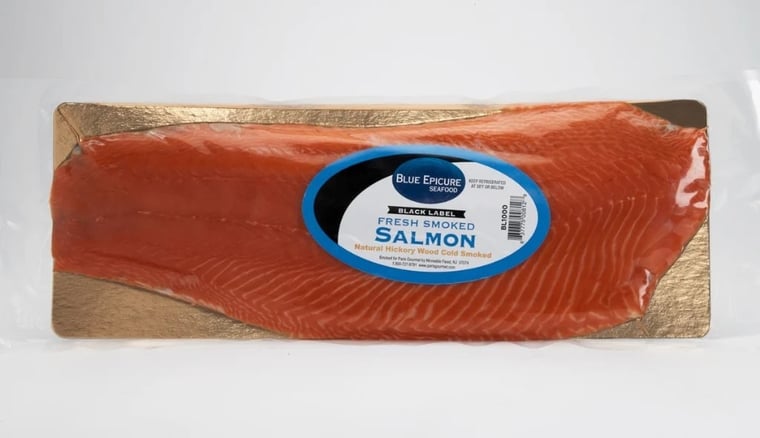
Scottish salmon, hand-cured for 24 hours and cold-smoked over hickory by a local artisan, on grilled sourdough |
|
|
Tuna niçoise |
Wild Cape Verde skipjack, hand-cut and packed in olive oil, with haricots verts and soft egg |
|
|
Marinated anchovies |
Spanish white anchovies marinated in white wine vinegar, finished with parsley |
|
Tips for Writing Sourcing-Forward Menu Copy
- Lead with origin. "Scottish salmon" does more work than "premium salmon."
- Add one method detail. Cure time, smoking wood, or catch method is enough.
- Stay as specific as your paperwork allows. If origin varies by lot, say "North Atlantic" rather than naming a country you can't confirm every week.
- Keep it short. One line of sourcing beats a paragraph nobody reads.
Our Take: Accurate menu copy builds more trust than impressive menu copy. Specific beats flowery every time.
How Can Restaurants Make the Most of National Seafood Month?
Use National Seafood Month as a launch point for your sourcing story, not a one-time promotion. NOAA Fisheries recognizes October as National Seafood Month, giving you a built-in reason to spotlight where your seafood comes from.
How to Roll Out Sustainable Sourcing in October |
||
|---|---|---|
|
Week |
Action |
Goal |
|
Week 1 |
Audit seafood suppliers with the five-question checklist |
Confirm what you can claim |
|
Week 2 |
Rewrite seafood menu descriptions with origin and method |
Put sourcing in front of guests |
|
Week 3 |
Run a staff tasting with two or three sourcing details per dish |
Give servers confident talking points |
|
Week 4 |
Launch a "source of the month" special and share it on social |
Turn the story into sales |
Need dish ideas to build around? See our guides to gourmet tinned fish on restaurant menus and raw bar ingredients for oyster season.
Ready to Build a Sustainable Seafood Program?
Sustainable seafood sourcing starts with traceability and documentation, and it pays off when that story makes it onto the menu. Ask every supplier the same five questions, work with partners who can answer them, and turn the details into menu language guests notice. National Seafood Month is the perfect time to start, and the habits you build in October carry through the rest of the year.
Contact Paris Gourmet to find a distributor and build a seafood program you can stand behind →
Frequently Asked Questions About Sustainable Seafood Sourcing