- By Charlotte Brown
- September 10, 2026
Tinned fish has jumped from the pantry aisle onto restaurant menus, retail grazing boards, and social feeds, trading its "emergency dinner" reputation for a spot next to charcuterie and cheese.
In fact, the U.S. canned seafood market pulled in more than $5 billion in 2023 and is on pace to hit $7.9 billion by 2030, growing roughly 5% a year, according to Tastewise.
For restaurants and specialty retailers, it's a low-waste, high-margin category with a customer base already primed to buy in. This post covers what's fueling the trend, why tuna is the easiest entry point for newcomers, and how Blue Epicure Seafood's Solid Tuna in Olive Oil fits into a program that captures it.
Key Takeaways:
- Tuna drives about 37% of social posts about tinned fish.
- Canned tuna holds quality for up to five years, nearly eliminating spoilage risk.
- Buyers pay up to 10% more for seafood perceived as sustainably sourced.
- Tuna is one of the best tinned fish to start your program with.
What's Driving the Gourmet Canned Fish Trend Right Now?
Better packaging, imported conservas-style products, and a viral grazing-board aesthetic are making tinned fish more popular than ever. In 2026, tuna alone accounted for roughly 37% of social posts about tinned and canned fish, according to Tastewise's 2026 tinned fish trend report, as more people plate it like an ingredient instead of hiding it in a sandwich.
What Is Conservas?
Conservas is the Portuguese and Spanish tradition of preserving high-quality seafood in oil, brine, or sauce inside a tin, historically prized for flavor and craftsmanship rather than treated as a shelf-stable backup.
Creators plate tins of tuna and sardines the way a charcuterie board treats prosciutto, pairing them with crackers, pickles, and good olive oil. Once tinned fish photographs like an appetizer, it gets ordered like one, and shoppers now ask for fancy canned fish, not the supermarket standby.
Why Does Tinned Fish Work So Well for Restaurants and Specialty Retailers?
Tinned fish is a low-waste, high-margin category. Unopened canned tuna and sardines can hold their quality for up to five years, giving operators a much longer selling window than fresh seafood.
Fresh fish has days to move before an unsold portion becomes a loss. Tinned tuna can sit in dry storage until it's needed, allowing buyers to order in volume without gambling on spoilage.
Our Experience: Across Paris Gourmet's distributor network, operators use tinned fish as a hedge against volatile fresh seafood pricing. With less waste and fewer forced markdowns, buyers get a more predictable cost of goods alongside the convenience of a shelf-stable product.
How Are Chefs and Retail Buyers Using Gourmet Canned Fish Right Now?
Chefs are building tinned fish into shareable boards and quick, high-margin starters, while retail buyers merchandise it as a specialty section instead of the canned goods aisle.
Where Gourmet Tinned Fish Shows Up Today |
||
|---|---|---|
|
Setting: |
Common Application: |
Why It Works: |
|
Wine Bar |
Shareable tinned fish board with crackers and pickles |
High visual appeal, fast to plate, strong margin |
|
Restaurant |
Pasta, salad, or grain bowl add-in |
Low labor, familiar flavor, easy upsell |
|
Retail |
Specialty endcap next to crackers and olive oil |
Increases basket size through cross-merchandising |
|
Retail |
Curated gift bundles and gift boxes |
Premium price point, seasonal sales driver |
The fastest-moving restaurant application is the shareable board: tuna plated with crackers, fresh-baked bread, pickled vegetables, and good butter, priced like a starter but costing like a pantry item. Retail buyers merchandise it next to crackers and oils, the way a store treats a cheese case.
Browse Paris Gourmet's seafood and specialty brand catalog →
Why Is Tuna the Easiest Way In for Tinned Fish Newcomers?
Tuna is the lowest-friction entry point into tinned fish: its flavor is mild and familiar, not an acquired taste like sardines, anchovies, or mackerel can be for first-timers.
Most guests and shoppers already know tuna from a sandwich, salad, sushi, or pasta dish, removing the biggest barrier to a new category: convincing someone to try something unfamiliar.
A briny sardine or a strong anchovy asks a lot of a first-timer. A well-sourced tuna in olive oil asks almost nothing.
So why does that matter? It changes where a program starts. Tuna plays well across cuisines, including Mediterranean, American comfort food, and French bistro, without needing a diner who's already a tinned fish fan.
What Is Skipjack Tuna?
Skipjack is a smaller tuna species with lower mercury content than larger species like albacore or bluefin. It’s commonly used for canned tuna and works especially well in olive-oil-packed applications.
About 24% of tinned fish consumers say convenience is a top purchase driver, and tuna delivers: no descaling, no bones, no strong smell front of house.
Expert Insight: Think of tuna as the anchor SKU, not the entire program. Once it performs, operators can expand into sardines, anchovies, mackerel, and other more adventurous options.
Meet Blue Epicure Seafood's Solid Tuna in Olive Oil
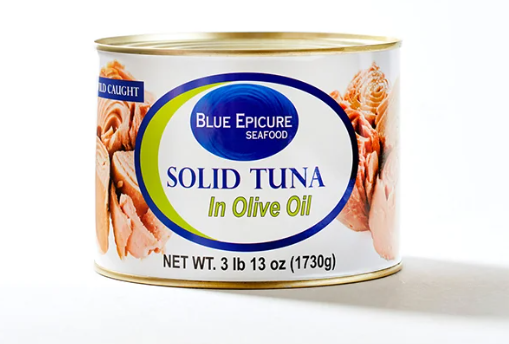
Blue Epicure Seafood's Solid Tuna in Olive Oil is a wild-caught, hand-cut skipjack tuna packed in Italian olive oil using traditional Portuguese processing, a gourmet anchor product without an unfamiliar species or flavor.
The tuna is wild-caught off Cape Verde in the Northern Atlantic via sustainable methods, then hand-cut to preserve larger, intact loin pieces rather than flaked or shredded, the difference between a tin that eats like a composed dish and one that reads as filler. It's packed in Italian extra virgin olive oil with just tuna and salt added, and it's Dolphin Safe certified.
Our Take: For an operator or retailer building a first tinned fish offering, one well-sourced, easy-to-explain SKU beats stocking five unfamiliar species at once. This tuna does that job: one tin, one clear story, one flavor almost every guest already likes.
It comes in a 3.8 lb. tin, six per case, sized for foodservice volume, fitting a kitchen running a recurring board as easily as a specialty counter selling by the portion.
Shop Blue Epicure Seafood's Solid Tuna in Olive Oil →
How Can Restaurants and Retailers Build a Fancy Tinned Fish Program?
Start with one approachable anchor product like tuna, vet suppliers for sustainability credentials, and build outward into pairings and merchandising once that first SKU proves itself.
Buyers seeing the strongest results don't launch a five-SKU section on day one. They start with one easy-to-explain product (tuna is the obvious choice) and build outward, confirming sourcing and certifications first: wild-caught claims, dolphin-safe status, and traceability all support the story later.
How To Build a Fancy Tinned Fish Program |
||
|---|---|---|
|
Stage: |
Action: |
Outcome: |
|
Anchor |
Launch with one approachable SKU, such as tuna in olive oil |
Builds trust before introducing stronger flavors |
|
Vet |
Confirm sourcing and sustainability certifications with the supplier |
Supports pricing story and customer trust |
|
Pair |
Add crackers, olive oil, pickles, or bread for boards or bundles |
Increases basket size and check average |
|
Expand |
Layer in sardines, salmon, anchovies, or mackerel |
Grows the category once the base customer is established |
|
Price |
Position as a premium, shareable item, not a pantry commodity |
Protects margin |
Once the first tin sells, pair it with crackers, bread, or condiments to lift basket size, then price it like a specialty item, not a canned good.
Ready to Bring Gourmet Tinned Fish to Your Menu or Shelf?
The gourmet canned fish trend isn't a passing social moment. It's a shelf-stable, high-margin category already carrying real weight on menus and retail shelves, and tuna is the easiest place to start.
Blue Epicure Seafood's Solid Tuna in Olive Oil gives restaurants and retailers a wild-caught, traceable, Dolphin Safe anchor product guests and shoppers already like.
Contact Paris Gourmet to add Blue Epicure Seafood's Solid Tuna in Olive Oil to your next order →
Frequently Asked Questions About Gourmet Canned Fish