
- By Charlotte Brown
- November 10, 2026
Service format isn’t a detail you settle after the menu is locked. It’s a staffing, timeline, and presentation strategy all at once, and getting it wrong shows up fastest where it hurts most: overworked servers and guests waiting too long for their first course.
In 2026, Curate’s catering industry trends report found that 98% of catering operators cite labor costs as a major concern, and with holiday guest counts climbing while kitchen staff stays tight, the format you choose (plated, buffet, or family-style) is an even more serious operational consideration.
Here’s an explanation of the labor, speed, and presentation tradeoffs of each format, when each one makes sense for a given guest count and kitchen size, and practical tips for executing all three well this holiday season and beyond.
Key Takeaways
- With 98% of catering operators citing labor costs as a major concern (Curate, 2026), service format is a staffing decision, not just a client preference.
- Match the format to your guest count and kitchen size.
- Plated service needs the most servers per guest, buffet needs the fewest, and family-style sits in between.
What’s the Difference Between Plated, Buffet, and Family-Style Banquet Service?
|
What is a Banquet Service? A banquet service format is the method a venue uses to get food from the kitchen to guests at a catered event, typically plated, buffet, or family-style, each with its own labor, timing, and presentation profile. |
Plated, buffet, and family-style service differ mainly in where the labor sits.
- Plated service puts it on the serving staff, who plate and carry individual courses.
- Buffet service puts it on guests, who serve themselves from stations.
- Family-style service splits it down the middle: the kitchen pre-portions platters that go out to each table to share.
Each format changes how many servers you need, how long the meal takes to move, and how formal the presentation reads to guests.
|
Comparison: Banquet Service Formats |
||
|
Format |
Typical Server Ratio |
Best For |
|
Plated |
1 server per 16-20 guests |
Smaller, formal events with full kitchen capacity |
|
Buffet |
1 server per 25-30 guests |
Larger guests counts or limited back-of-house staff |
|
Family-Style |
1 server per 15-20 guests |
Mid-size events built around a shared, hospitable feel |
According to Cvent’s guide to banquet service ratios, a conventional sit-down meal with some foods preset needs at least one server for every 20 guests, and that ratio tightens to one server per 16 guests when the event includes poured wine or French-style service. Buffet and family-style events generally run lighter than that, since guests either serve themselves or share a platter already at the table.
How to Execute Plated Service Without a Kitchen Bottleneck
Plated service runs smoothly when the kitchen can plate every course within a tight window and servers can get food to the table while it’s still hot. That means staffing to the course, not just to the guest count, and building in a backup plating line before you ever hit a few hundred covers.
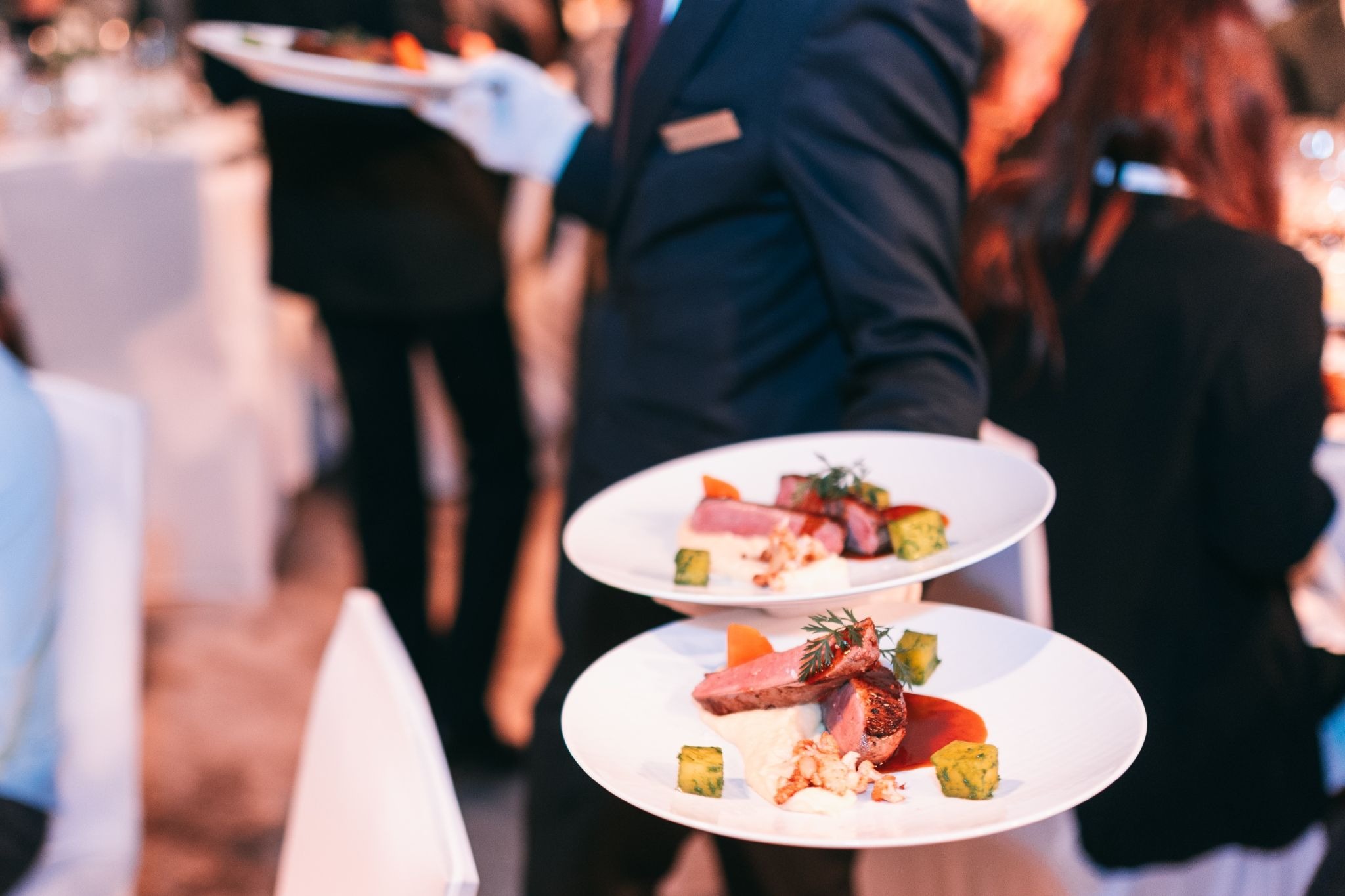
What happens when the entrée course runs five minutes behind at a 300-guest event? Every table past the first few gets a noticeably colder plate. That’s a detail guests will unfortunately remember long after the menu itself.
Plated service runs the tightest server ratio of the three formats, and a 300-guest dinner staffed at one server per 20 guests already needs 15 servers for food service alone, before bussers, captains, or bar staff.
A few habits keep that math from turning into a bottleneck:
- Five courses in waves. Match how many plates leave the kitchen to how many servers can carry them, rather than sending an entire course out at once.
- Build in a second plating line. A backup station, staffed separately from the one already cooking the next course, keeps one slow course from stalling the whole room.
- Stage garnishes ahead of service. Anything that can be portioned and ready before the first course fires buys back minutes once service starts.
For plate garnishes that hold their presentation through a long plating run without added prep time, check out our Amifruit purees and pastes.
How to Keep a Buffet Line Moving at Holiday Volume
A buffet line moves fastest when stations are spaced to spread out guest traffic, chafing dishes are replenished before they run low rather than after, and at least one staff member is dedicated to managing the line instead of splitting that duty with table service.
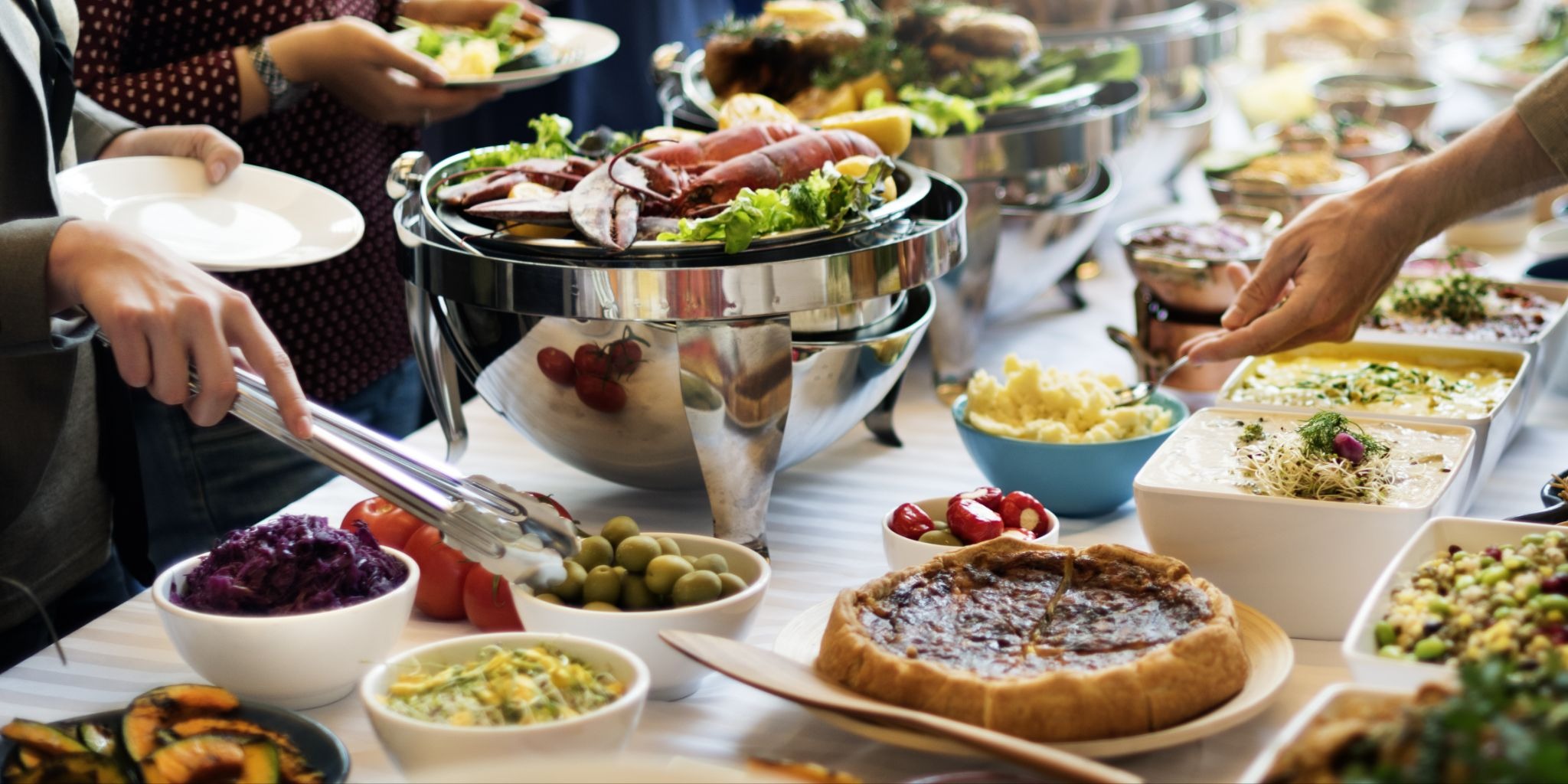
Buffet service runs on the lightest staffing ratio of the three formats, which is exactly why one understaffed or poorly placed station creates a visible bottleneck fast.
A few habits protect that labor advantage instead of losing it mid-service:
- Mirror the busiest stations. For crowds over 150 guests, set up two identical lines so one end of the room doesn’t wait on the other.
- Separate slow items from quick-grab items. Keep a carving or action station apart from bread, salads, and sides, so a slow-moving line doesn’t back up the whole buffet.
- Replenish on a schedule, not a trigger. A runner who checks station levels on a set rotation catches a thin chafing dish before guests do.
For self-serve pastry items built to go straight from the oven to display without adding pastry staff to the line, see our Bon Patissier ready-to-bake pastry catalog.
On the savory side, see our Gourmand charcuterie line for buffet and retail display,
How to Portion Family-Style Service Fairly Across a Table
Family-style service stays fair when platters are pre-portioned in the kitchen to a set number of pieces per table size, rather than left to guests to divide on their own, and when a server or table captain controls when and how each platter gets passed.
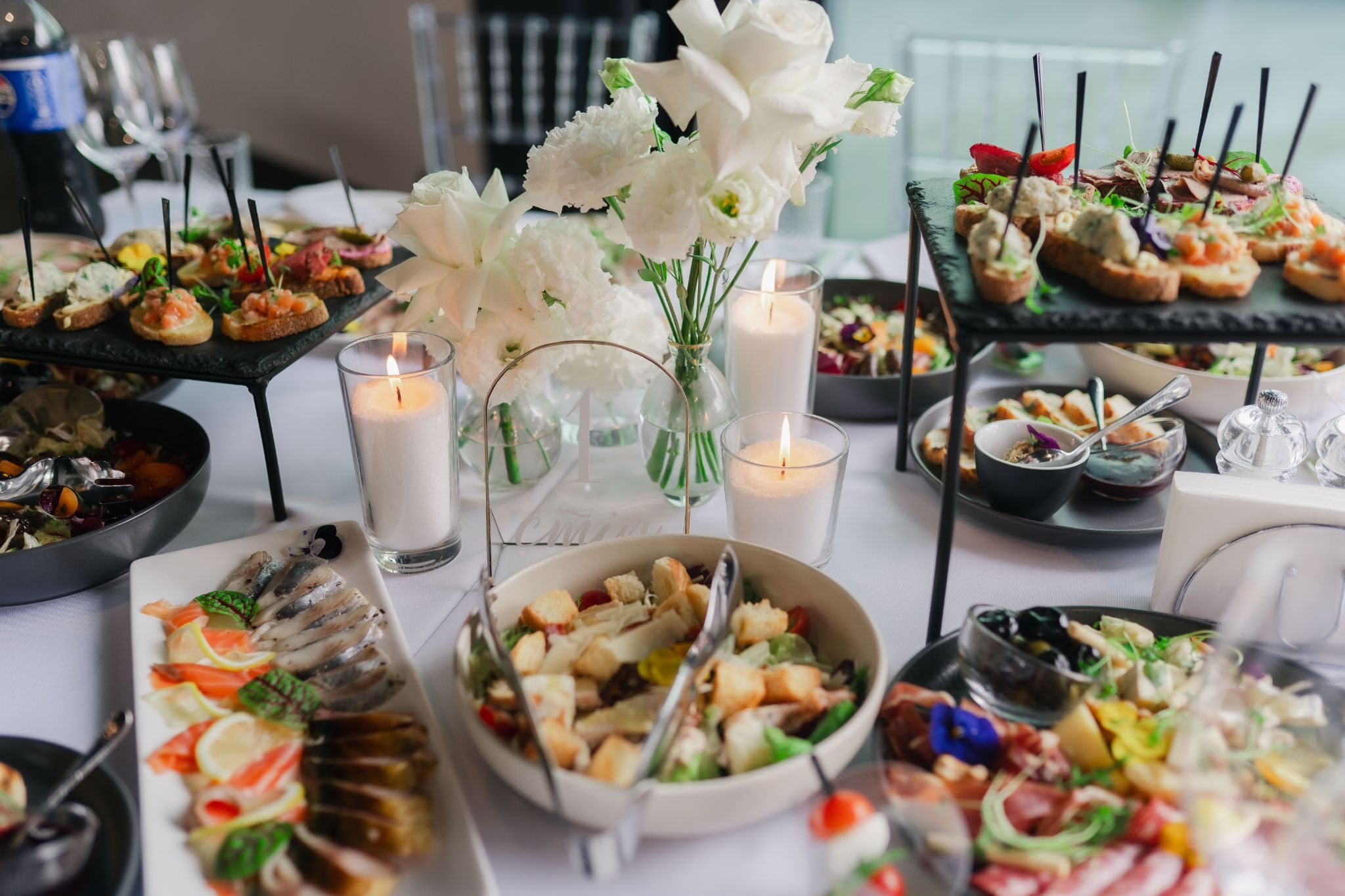
Family-style sits between plated and buffet on both labor and food volume. It needs fewer dedicated servers per guest than a full plated dinner, but more prep time upfront than a buffet, since every platter has to be portioned to the table before service starts.
Two habits keep that portioning fair once the platters hit the floor:
- Size platters to the table, not an estimate. A 10-top gets a platter built for 10-12 servings, portioned in the kitchen, not a generic tray meant to cover “about a table.”
- Assign someone to initiate the pass. A table captain or lead server who starts the platter moving, and checks that it’s made its way around, keeps the first few guests from over-serving themselves before the last guest ever sees it.
Our Madrange charcuterie meats and Tierra de España tapas and Spanish specialty line are both built around this kind of pre-portioned, table-ready format.
Which Banquet Service Format Fits Your Guest Count and Kitchen Size?
The right banquet service format comes down to two questions: how many guests you’re serving, and how much kitchen and staging space you have.
|
Which Banquet Service Format Fits Your Event? |
||
|
Guest Count |
Kitchen Size |
Recommended Format |
|
Under 100 |
Full kitchen, ample staging |
Plated |
|
100 to 250 |
Full kitchen, ample staging |
Plated or family-style |
|
100 to 250 |
Limited kitchen or staging |
Buffet |
|
250+ |
Any kitchen size |
Buffet, or family-style with extra prep time |
A strong kitchen and enough servers can stretch plated service well past 250 guests, and a tight kitchen can make even 100 guests feel crowded for family-style service. Guest count sets the baseline, and kitchen size and staffing confirm it.
Talk to Us About Building Your Banquet Menu Around Your Service Format
Match the banquet service format to the realities of your holiday season instead of defaulting to whatever ran last year. The right products behind each course can carry some of that labor load for you. We’re happy to help build your menu with specialty food products and recipes from our in-house chefs. Browse our catalog or contact us online to get started.
For more ways to protect margin on labor-heavy menus, see our guide to menu profitability strategies for small restaurants.
Frequently Asked Questions About Banquet Service