
- By Charlotte Brown
- February 05, 2026
Saffron has long been prized as both a culinary and cultural cornerstone, valued for its vivid color, unmistakable aroma, and ability to elevate dishes.
As the world’s most expensive spice, saffron demands thoughtful handling. Small variations in quality, extraction, or timing can dramatically affect flavor and performance, making technique essential in professional kitchens.
When used correctly, saffron delivers remarkable depth and refinement across both savory and sweet applications.
This guide is designed to give chefs practical, kitchen-tested insight into how to use saffron effectively—from understanding its origins and chemistry to applying it confidently in classic and modern dishes.
What Is Saffron?
Saffron is the dried stigma of the flower Crocus sativus.
Each flower produces only three delicate red stigmas, all of which must be harvested by hand. This labor-intensive process is the primary reason saffron is the most expensive spice in the world.
From a culinary perspective, saffron contributes three essential elements to a dish:
- Color: A golden-yellow hue that infuses liquids and fats
- Aroma: Floral, honeyed, and slightly hay-like notes
- Flavor: Subtle bitterness that adds complexity rather than heat
Unlike spices used for bold seasoning, saffron works best as a supporting ingredient, enhancing structure, aroma, and visual appeal without overwhelming other components.
Origins & Harvesting: Understanding Saffron’s Value
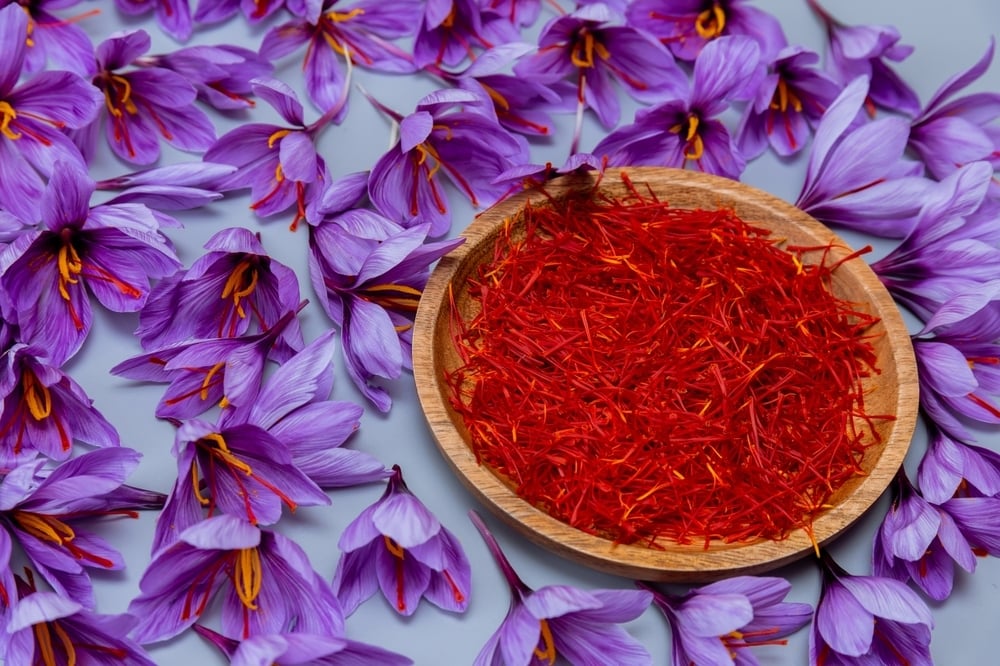
Saffron is traditionally grown in regions with hot, dry summers and cool autumns, including parts of Iran, Spain, and other Mediterranean climates.
The Crocus sativus flower blooms for only a short window each year, often just a few weeks. During that time, flowers must be harvested by hand at peak freshness (typically in the early morning) to protect the fragile stigmas.
Each flower produces just three stigmas, which are carefully separated, dried, and sorted.
- It can take tens of thousands of flowers to produce a single pound of saffron, making harvesting time, labor skill, and drying technique critical to final quality.
- Improper handling at any stage—over-drying, crushing, or exposure to light and heat—can significantly reduce aroma, color strength, and flavor.
Reliable sourcing ensures that each pinch delivers predictable color extraction, clean aroma, and balanced bitterness—essential for menu execution, food cost control, and repeatable results across services.
The Science of Saffron Flavor & Color
Saffron’s impact in cooking is rooted in a small set of powerful natural compounds. Understanding these compounds allows chefs to extract maximum value from even the smallest amount of saffron—and avoid wasting one of the kitchen’s most costly ingredients.
Three key compounds define saffron’s performance:
Crocin
Responsible for saffron’s deep golden color, crocin is water-soluble and releases its pigment quickly when properly extracted.
- This is why saffron is often steeped in warm liquid before being added to a dish.
- Fat alone will not fully activate crocin, making liquid contact essential for consistent color distribution.
Safranal
Safranal delivers saffron’s distinctive aroma—floral, honeyed, and slightly earthy. It is highly volatile and sensitive to heat.
- Prolonged or aggressive cooking can diminish aromatic intensity, which is why saffron is often added later in the cooking process or gently infused rather than cooked directly over high heat.
Picrocrocin
This compound provides saffron’s subtle bitterness, which balances richness and sweetness in both savory and pastry applications.
- When handled correctly, picrocrocin adds complexity rather than harshness, helping saffron integrate seamlessly into sauces, custards, and starch-based dishes.
These compounds respond to time, temperature, and medium. Excessive heat, improper blooming, or rushed application can mute aroma, weaken color, and flatten flavor.
How to Use Saffron Correctly in Professional Cooking
Cooking with saffron effectively in a professional kitchen requires proper technique to ensure consistent color, aroma, and flavor while protecting food cost and minimizing waste.
Blooming and Extraction Best Practices
Saffron should almost always be bloomed before use.
This step activates its key compounds and allows for even distribution throughout a dish.
- Lightly crush the saffron threads between your fingers or in a mortar and pestle.
- Steep in a small amount of warm liquid (not boiling), such as water, stock, milk, or cream.
- Allow the saffron to bloom for 10–20 minutes until the liquid becomes richly colored and aromatic.
Warm liquid accelerates extraction, while boiling temperatures can damage saffron’s delicate aromatic compounds.
For consistent results, chefs should bloom saffron separately rather than adding dry threads directly to a hot pan.
Timing, Ratios, and Temperature Control
A little saffron goes a long way.
In most professional applications, a few threads are sufficient to color and flavor an entire batch.
- Add bloomed saffron and its liquid toward the middle or end of cooking to preserve aroma.
- Avoid prolonged high heat once saffron is introduced.
- Incorporate evenly into sauces, rice, custards, or bases for controlled flavor dispersion.
Because saffron’s compounds are sensitive to time and temperature, late-stage integration often yields the cleanest results.
Common Mistakes Chefs Should Avoid When Using Saffron
- Adding saffron directly to hot oil without blooming
- Overcooking or boiling saffron-infused liquids
- Using inconsistent saffron quality across services
- Treating saffron as a garnish rather than a functional ingredient
When handled with care, saffron delivers refined color and complexity without overpowering a dish.
Savory Applications: Classic & Modern Saffron Dishes
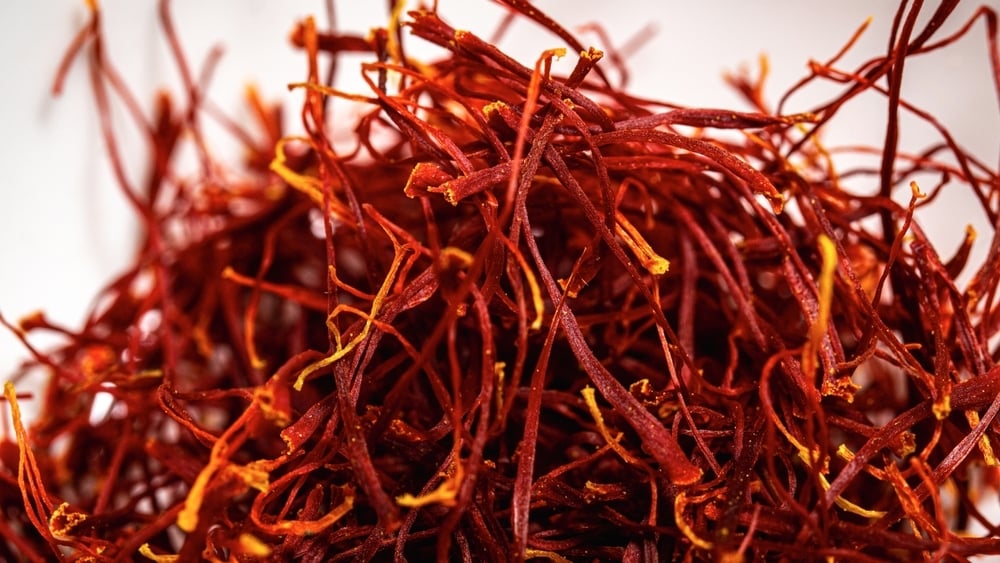
Saffron has long played a central role in some of the world’s most iconic savory dishes, where its color, aroma, and subtle bitterness enhance structure rather than dominate flavor.
Classic Saffron Dishes
Saffron is foundational in several time-honored recipes where technique and balance are essential:
- Paella: Saffron infuses the rice with golden color and aromatic warmth, complementing seafood, poultry, and smoky paprika.
- Bouillabaisse: In this Provençal fish stew, saffron ties together briny seafood, tomato, fennel, and herbs.
- Risotto Milanese: Saffron provides both visual richness and a refined bitterness that balances butter and cheese.
In these dishes, saffron is typically bloomed and added to the cooking liquid, ensuring even color distribution and a cohesive flavor profile.
Modern Savory Uses in Professional Kitchens
Beyond tradition, chefs increasingly use saffron to elevate modern savory applications:
- Seafood broths, bisques, and veloutés
- Shellfish sauces and beurre blancs
- Rice, grains, and legume-based dishes
- Vegetable-forward plates featuring squash, cauliflower, or fennel
Saffron’s restrained bitterness and aromatic lift make it especially effective in clean, minimal preparations where precision matters.
Pairing Principles: Salt, Fat, and Acidity
Saffron performs best when supported by thoughtful balance:
- Salt enhances aroma and clarifies flavor
- Fat (butter, cream, olive oil) carries saffron’s aromatic compounds
- Acidity (citrus, tomato, wine) prevents heaviness and sharpens contrast
When used intentionally, saffron integrates seamlessly into savory dishes—adding refinement, cohesion, and visual impact without overwhelming the plate.
Sweet Applications: Using Saffron in Pastry & Desserts
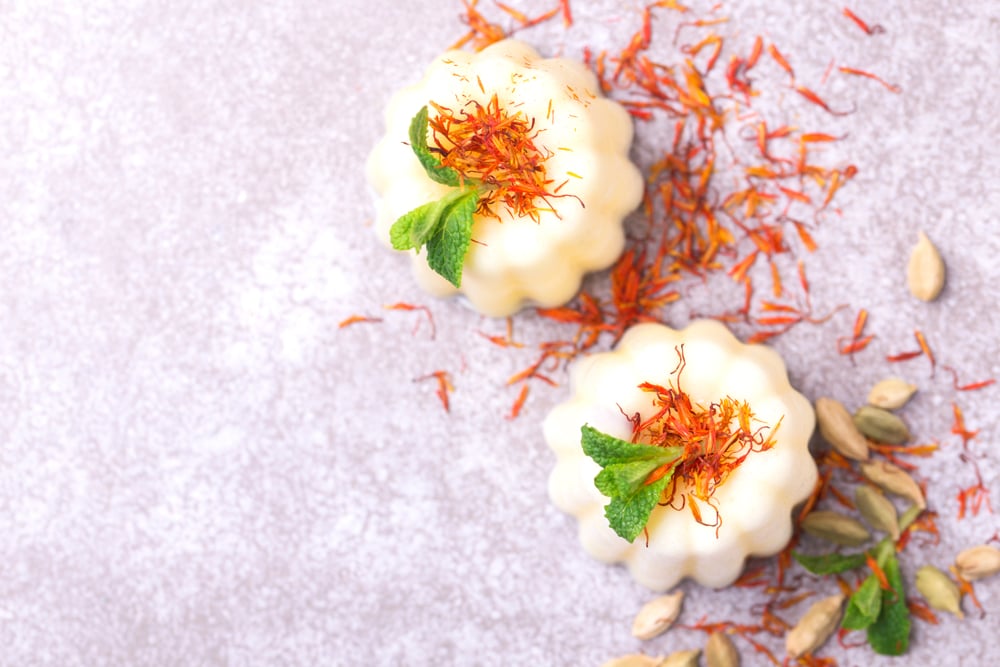
While often associated with savory cooking, saffron is equally effective in pastry and dessert applications when used with restraint. Its floral aroma and gentle bitterness add sophistication to sweet dishes, helping balance richness and prevent excessive sweetness.
Where Saffron Shines in Pastry
Saffron performs best in desserts with a neutral or dairy-forward base, where its aroma and color can fully develop:
- Crème anglaise and custards: Saffron adds warmth and visual depth without overpowering vanilla or egg.
- Ice cream and frozen desserts: Its aromatic compounds bloom beautifully in warm dairy before freezing, delivering clean, even flavor.
- Baked goods: Saffron pairs well with brioche, cakes, and enriched doughs, offering subtle complexity and a golden hue.
In these applications, saffron should always be bloomed in warm liquid—typically milk or cream—before incorporation to ensure even extraction and consistency.
Balancing Saffron with Sweetness and Fat
In pastry, saffron works as a counterbalance rather than a primary flavor. Its natural bitterness helps cut through sugar and fat, creating a more refined finish.
- Pair with dairy to soften intensity and carry aroma
- Use alongside warm spices such as cardamom or vanilla for harmony
- Avoid heavy acidity, which can compete with saffron’s delicate profile
For professional pastry chefs, saffron offers a way to introduce nuance, color, and aroma without relying on additional sugar or artificial flavoring.
Choosing Professional-Grade Saffron: What Chefs Should Look For
Not all saffron performs the same in a professional kitchen. Differences in harvesting, drying, and handling can significantly affect color strength, aroma, and consistency.
For chefs, selecting professional-grade saffron is essential for reliable execution and predictable results across services.
This table outlines the key quality indicators chefs should evaluate when sourcing saffron for reliable color, aroma, and flavor extraction.
|
Quality Factor |
What to Look For |
Why It Matters in Professional Cooking |
|
Appearance |
Whole, deep red stigmas with minimal yellow or orange |
Indicates high crocin content and stronger color extraction |
|
Aroma |
Clean, floral, honeyed scent |
Signals freshness and active safranal compounds |
|
Thread Integrity |
Long, intact threads—not powder or fragments |
Preserves potency and ensures controlled blooming |
|
Color Release |
Rich golden hue when bloomed in warm liquid |
Confirms proper drying and high pigment concentration |
|
Flavor Balance |
Subtle bitterness without harshness |
Allows saffron to enhance dishes without overpowering |
|
Consistency |
Uniform results from batch to batch |
Critical for recipe standardization and food cost control |
|
Purity |
100% dried stigma of Crocus sativus |
Ensures no fillers, additives, or artificial coloring |
|
Sourcing Transparency |
Clear origin and handling standards |
Builds confidence in quality and long-term reliability |
Product Spotlight: Maison de Choix Pilar Sargol Saffron
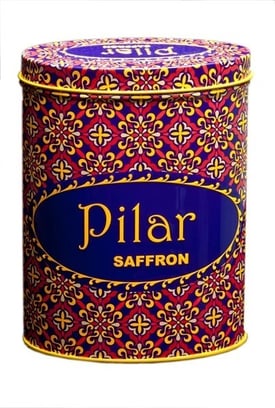
Maison de Choix Pilar Sargol Saffron delivers professional-grade performance across both savory and pastry applications. Carefully sourced and handled, it provides the reliability required in high-volume, high-standard kitchens.
Pilar Sargol saffron consists of 100% dried stigma of the flower Crocus sativus—nothing added, nothing diluted.
The long, intact threads are selected for their deep red color, clean floral aroma, and balanced bitterness, ensuring dependable results with every bloom.
In use, Maison de Choix Pilar Sargol Saffron offers:
- Consistent, vibrant color extraction
- Refined aromatic release without harshness
- Predictable performance across batches and services
Maison de Choix Pilar Sargol Saffron exemplifies how thoughtful sourcing and craftsmanship translate directly to performance on the plate.
Elevate Your Menu With Top-Quality Saffron
Our saffron delivers dependable color, aroma, and flavor, giving chefs confidence in every application—from savory classics to refined pastry work.
Explore Paris Gourmet’s selection of professional-grade saffron, sourced for purity, consistency, and reliable performance in demanding kitchens.