- By Charlotte Brown
- October 19, 2026
When it comes to charcuterie boards, operators put real thought into the prosciutto and the triple crème. The mustard deserves the same attention, because it brings the acid and heat that cut through cured fat and rich cheese.
Swapping a generic yellow or honey mustard for a coarse-grain, Dijon, or fruit-based style changes how every other item on the board tastes. This post walks through which gourmet mustard pairs with which meats and cheeses, plus how restaurants and retailers can use mustard as a simple, low-cost way to set a standard board apart.
Key Takeaways:
- A balanced charcuterie board needs salt, fat, acid, and heat. Mustard covers acid and heat.
- Whole grain, smooth Dijon, and fruit-based mustards each suit different meats and cheeses.
- Paris Gourmet recommends a two- or three-mustard flight as a low-cost way to make a standard board feel premium.
Why Does a Charcuterie Board Need Mustard?
A charcuterie board needs mustard because cured meats and aged cheeses are almost entirely salt and fat, and the palate gets tired of them quickly. Mustard adds a brightness and kick that resets the palate between bites, so the fifth slice of saucisson tastes as good as the first.
What Is Acid Balance?
Acid balance is the use of acidic ingredients like vinegar, wine, or citrus to offset the richness of fatty foods. On a charcuterie board, it's what keeps the overall experience from feeling heavy.
Think of a well-built board as four elements working together:
What Each Charcuterie Board Element Does |
||
|---|---|---|
|
Element |
Found In |
Its Job |
|
Salt |
Cured meats, olives |
Seasons and builds savory depth |
|
Fat |
Salami, pâté, triple crème |
Adds richness and mouthfeel |
|
Acid |
Mustard, cornichons, pickled onions |
Cuts richness and resets the palate |
|
Heat/Sharpness |
Mustard, radish, peppercorn |
Wakes up the palate |
Our Take: Jam and honey have their place on a board, but they add sweetness without any real cut. Pair one fruit spread with one mustard and the board covers sweet, acid, and heat.
What Is the Best Mustard for Charcuterie Boards?
There's no single best mustard for a charcuterie board. The right one depends on what's on the board, so the strongest approach is to stock two or three styles that each cover a different job. Gourmet mustard generally falls into three families, and each one pairs differently.
Whole Grain Mustard: Texture and Gentle Heat
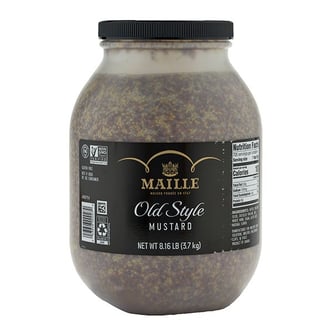
Whole grain mustard keeps the seeds intact, bringing texture and a rounder, milder heat than smooth styles. It's the most forgiving pick for a board and holds up to the heaviest items on it.
Maille Whole Grain Old Style Mustard is made with white wine and whole mustard seeds, and it comes in a 1-gallon jar, four per case, sized for kitchens building boards at volume. It works best next to country pâté, rillettes, smoked sausage, and firm cheeses like Comté or aged cheddar.
Smooth Dijon: Clean, Sharp Bite
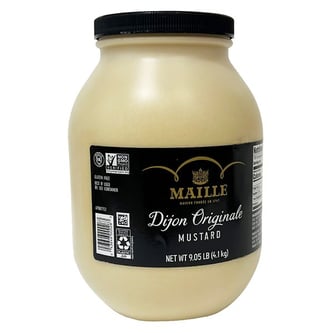
Smooth Dijon is the sharpest of the three styles. It gives a bright, nose-clearing heat that cuts straight through fat. It's the classic choice for French-style boards and anything with a lot of richness.
- Maille Smooth Dijon Mustard: A 1-gallon jar, four per case, for back-of-house portioning onto boards and into ramekins.
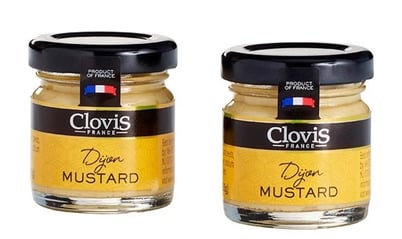
- Clovis France Dijon Mustard: A 1.2 oz glass jar, 12 jars per case. It's sized to sit right on the board or sell as a single grab-and-go jar at retail.
Dijon is a strong match for jambon de Paris, saucisson sec, roast beef, and nutty, buttery cheeses like Gruyère.
Fruit-Based Mustard: Sweet, Spiced, and Unexpected
Fruit-based mustards balance heat with sweetness, which makes them a natural bridge between meats and stronger cheeses. They also tend to be the item guests ask about.
Maison de Choix Purple Mustard (moutarde au moût de raisin) is made with grape must, mustard seeds, vinegar, and spices, and it comes in a 2.2 lb container. It pairs best with duck prosciutto, blood sausage, smoked ham, and blue or aged goat cheeses, where its sweetness softens the funk.
What Is Moutarde Violette?
Moutarde violette (purple mustard) is a French mustard made with grape must, the freshly crushed juice of wine grapes, which gives it a deep purple color and a sweet, spiced flavor. The style traces back to 14th-century Brive and Pope Clement VI, according to Brive Tourisme's guide to violet mustard.
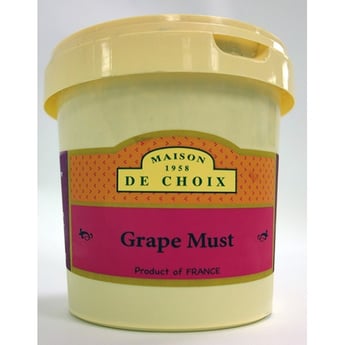
For more ideas on stocking the rest of the board, browse Paris Gourmet's specialty condiments →
How Do You Pair Gourmet Mustard With Meats and Cheeses?
Match the mustard's intensity to the richness of what it's paired with. Sharp Dijon cuts the fattiest items, whole grain stands up to rustic and smoked meats, and fruit-based mustard bridges sweet and funky flavors. Use this table as a quick reference when building a board or a menu description.
Mustard Pairing Guide for Charcuterie |
|||
|---|---|---|---|
|
Mustard Style |
Best With Meats |
Best With Cheeses |
Why It Works |
|
Whole grain (Maille Whole Grain Old Style) |
Country pâté, rillettes, smoked sausage |
Comté, aged cheddar, Gouda |
Texture and mellow heat hold up to rustic, hearty items |
|
Smooth Dijon (Maille, Clovis France) |
Jambon de Paris, saucisson sec, bresaola |
Gruyère, Brie, triple crème |
Sharp acidity cuts through the fattiest items |
|
Purple mustard (Maison de Choix) |
Duck prosciutto, smoked ham, boudin noir |
Roquefort, aged chèvre, Tomme |
Sweet, spiced notes bridge salty meat and funky cheese |
In contrast, a few pairings work against each other:
- Smooth Dijon with fresh chèvre: Fresh chèvre is too lean and delicate, so the mustard ends up drowning it out.
- Purple mustard with mild turkey or chicken: The sweetness takes over a lean protein.
- Whole grain with very thin prosciutto: The seeds overwhelm the texture of a delicate, paper-thin slice.
Explore Maison de Choix and Maille mustards through Paris Gourmet's distributor network →
Building a board for a new menu or catering season? Our chefs can help you work out pairings.
How Can Restaurants and Retailers Use Mustard to Upsell a Board?
A mustard flight is one of the cheapest ways to make a standard charcuterie board feel premium. A few ounces of mustard costs far less than an extra cured meat, yet it changes how guests perceive the whole board.
Here's how operators can put mustard to work:
- Serve a mustard flight. Three small ramekins (whole grain, Dijon, purple) turn one condiment into a tasting moment and justify a higher board price.
- Name the mustard on the menu. "With Maille Dijon and French violet mustard" reads very differently from "with mustard." Provenance sells.
- Serve the jar on the board. The Clovis France 1.2 oz glass jar can go straight onto the board, so there's no portioning, and it looks like a deliberate choice.
- Cross-merchandise at retail. Stock small mustard jars next to the cured meat and cheese case so shoppers can build their own board in one stop.
- Offer a "build your board" add-on. Let guests add a second mustard for a small upcharge, a high-margin line item with almost no labor.
Is It Time to Upgrade Your Mustard for Charcuterie Boards?
Upgrading the mustard is one of the simplest changes with the biggest effect on flavor. A whole grain, a sharp Dijon, and a fruit-based purple mustard cover nearly every meat and cheese pairing. Together they bring contrast that keeps a rich board balanced, at a fraction of the cost of adding another protein.
At Paris Gourmet, we source Maison de Choix, Maille, and Clovis France mustards for restaurants and retailers nationwide through its independent distributor network.
Contact Paris Gourmet to add gourmet mustards to your next order.
Frequently Asked Questions About Mustard for Charcuterie Boards