
- By Charlotte Brown
- May 13, 2026
In a professional kitchen, duck foie gras isn’t just about luxury; it’s about execution. The format you choose directly impacts labor, consistency, yield, and service speed during peak hours.
From searing perfectly portioned slices to building composed appetizers or enriching sauces, each foie gras format serves a distinct purpose.
For executive chefs, success comes down to selecting the right format for the job, balancing craftsmanship with operational efficiency.
This guide breaks down Gourmand’s Moulard foie gras formats and how to use each one strategically, so you can streamline prep, control costs, and deliver consistently refined results across your menu.
Why Format Selection Matters in Professional Kitchens When Cooking Foie Gras
Cooking foie gras successfully starts long before it hits the pan. The format you choose determines:
- Labor requirements (ready-to-use vs. fully fabricated)
- Portion control and yield
- Consistency across service
- Menu flexibility
- Execution speed during peak hours
In high-performance kitchens, these factors are critical.
Whether you're building a refined plated appetizer or executing a banquet menu at scale, selecting the right product ensures both quality and efficiency.
Quick Comparison: Which Duck Foie Gras Format Should You Choose?
With multiple foie gras formats available, selecting the right option comes down to how it will perform in your kitchen across prep, service, and plating.
This quick comparison breaks down how each format aligns with different operational needs, helping you make faster, more strategic decisions.
|
Format |
Best Use |
Skill Level |
Speed |
Cost Efficiency |
|
Mousse |
Spreads, canapés |
Low |
Fast |
Medium |
|
Terrine |
Sliced apps |
Low |
Fast |
Medium |
|
IQF Cubes |
Sauces, garnishes |
Medium |
Fast |
High |
|
IQF Slices |
Searing |
Low |
Fast |
Medium |
|
Whole Deveined (A) |
Custom prep |
High |
Slower |
High yield |
|
Whole (B) |
Production |
Medium |
Medium |
High |
|
Torchon |
Plated apps |
Low |
Fast |
Medium |
Ultimately, the right duck foie gras choice depends on your service model, labor availability, and menu goals.
Many kitchens find the most success not in choosing one format, but in using multiple formats strategically to balance efficiency, consistency, and culinary impact.
Foie Gras Mousse: Ready-to-Use Elegance
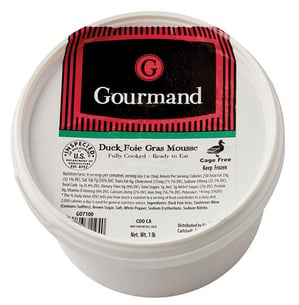
Best for: Spreads, canapés, composed appetizers
Foie gras mousse is one of the most accessible formats, offering a smooth, airy texture and immediate usability. It’s fully prepared, requiring no fabrication or cooking, making it ideal for kitchens that prioritize speed and consistency.
Real Menu Application Examples:
- Foie gras mousse profiteroles with cracked pepper and sea salt
- Brioche toast with foie gras mousse and seasonal jam
- Mousse-filled savory macarons for cocktail service
- Foie gras mousse canapé with pickled cherry and pistachio
Why it works:
- Eliminates prep time
- Consistent texture and flavor
- Easy to portion and pipe for clean presentation
For chefs looking to incorporate foie gras into menus without adding complexity, mousse delivers high-end appeal with minimal effort.
Foie Gras Terrine: Classic, Structured Presentation
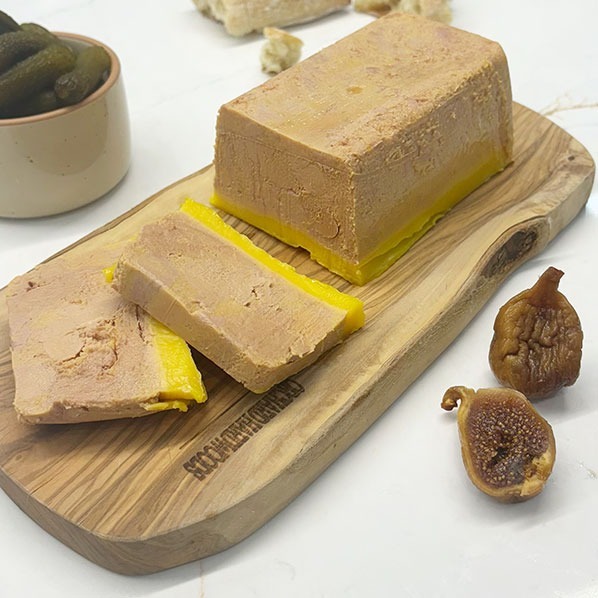
Best for: Sliced appetizers, charcuterie programs
Foie Gras Terrine offers a more structured, sliceable format with a dense, refined texture. It’s fully cooked and ready to serve, making it a staple for traditional presentations.
Real Menu Application Examples:
- Foie gras terrine with apricot mostarda and toasted pain de mie
- Sliced terrine with pistachio crumble, pickled shallot, and port reduction
- Terrine featured on a luxury charcuterie board with seasonal preserves
- Layered foie gras terrine with cognac-soaked fruit and spice gastrique
Why it works:
- Clean slicing for consistent plating
- Classic French presentation
- Balanced flavor profile that pairs well with sweet and acidic components
Terrine is ideal for chefs who want to deliver a timeless foie gras experience without the labor of preparing it from scratch.
IQF Foie Gras Cubes: Precision and Versatility
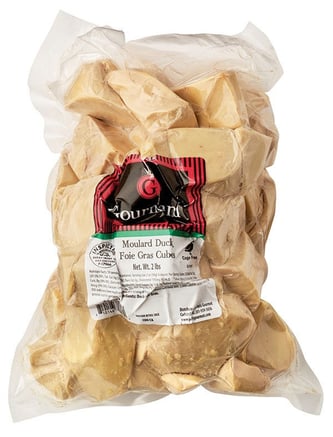
Best for: Sauces, garnishes, composed dishes
Individually quick frozen (IQF) foie gras cubes offer exceptional flexibility. Pre-portioned and easy to handle, they allow chefs to incorporate foie gras into a wide range of applications beyond traditional preparations.
Real Menu Application Examples:
- Foie gras-enriched veal reduction
- Root vegetable purée finished with foie gras emulsion
- Foie gras mounted into bordelaise sauce à la minute
- Wild mushroom risotto finished with foie gras cubes and thyme
Why it works:
- Precise portion control reduces waste
- Quick thawing for on-demand use
- Consistent quality across applications
For chefs focused on creativity and efficiency, IQF cubes make it easy to integrate foie gras into both classic and modern dishes.
IQF Foie Gras Slices (50g): Consistency for Searing
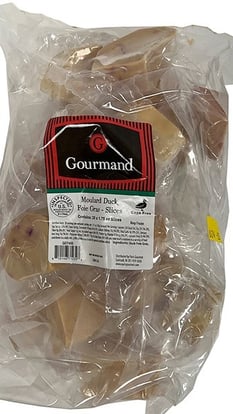
Best for: Seared foie gras applications, plated entrées
Pre-cut IQF foie gras slices are designed specifically for searing, offering uniform portioning and reliable performance during service.
Real Menu Application Examples:
- Seared foie gras with sour cherry gastrique and toasted brioche
- Foie gras atop dry-aged striploin with black garlic jus
- Seared foie gras with roasted apple, hazelnut crumble, and cider reduction
- Duck breast with foie gras medallion and red wine reduction
Why it works:
- Consistent size ensures even cooking
- Reduces fabrication time
- Ideal for high-volume service where precision matters
For kitchens that regularly feature seared foie gras, IQF slices streamline execution while maintaining the integrity of the final dish.
Chef Tip:
For optimal searing, use a dry, preheated carbon steel or cast iron pan (no oil needed). Foie gras will render its own fat almost immediately. The key is controlling that fat release: sear briefly over high heat to develop a crust while minimizing excess rendering, which can reduce portion size and impact texture. Drain between batches if needed to maintain pan temperature and avoid steaming.
Whole Deveined Foie Gras (Grade A): Maximum Control, Premium Results
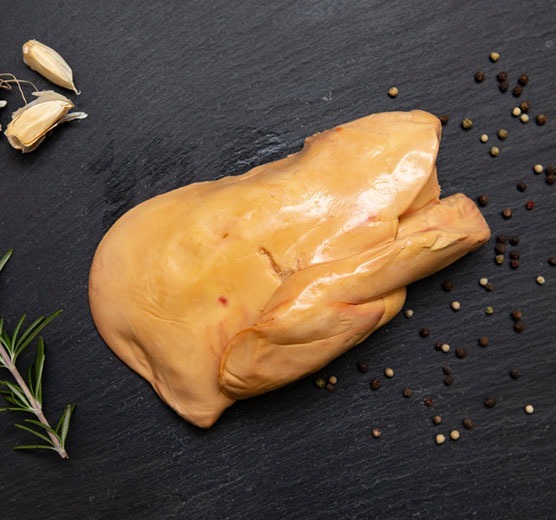
Best for: Custom preparations, terrines, torchon, searing
Whole deveined foie gras offers the highest level of control. Grade A represents premium quality, with superior color, texture, and minimal imperfections. Because it’s already deveined, it significantly reduces prep labor while maintaining flexibility.
Real Menu Application Examples:
- House-made foie gras torchon with preserved stone fruit
- Terrine layered with Armagnac and dried figs
- Custom-cut foie gras medallions for tasting menus
- Foie gras-stuffed poultry roulade
Why it works:
- High yield and minimal waste
- Eliminates the time-consuming deveining process
- Ideal for chefs who want to control seasoning and technique
This format is the go-to for chefs who prioritize craftsmanship and want to create signature foie gras dishes from the ground up.
Chef Tip:
Working with whole lobes allows for precise fabrication. Separate the gros lobe (larger lobe) for center-of-plate applications like searing, and reserve the petit lobe (smaller lobe) for torchon, terrines, or emulsified preparations.
From a yield perspective, properly handled Grade A foie gras can deliver 85–95% usable yield, depending on trimming and preparation method—making it a strong option for chefs balancing premium presentation with cost control.
Whole Foie Gras (Grade B): Value for High-Volume Kitchens
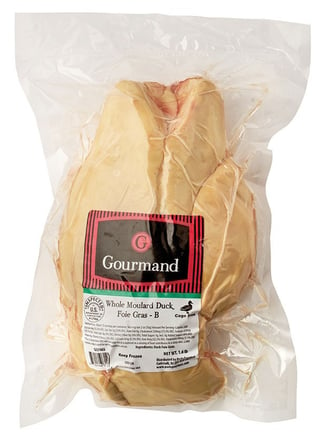
Best for: Large-scale production, processed applications
Grade B whole foie gras offers a more economical option while still delivering quality performance. It may have slight visual imperfections, but it remains suitable for many culinary applications.
Real Menu Application Examples:
- Foie gras pâté for banquets or catering service
- Foie gras folded into chicken mousseline or farce
- Enriched foie gras butter for steak and roasted proteins
- Foie gras incorporated into savory bread pudding or stuffing preparations
Why it works:
- Cost-effective for large-volume use
- Maintains flavor integrity
- Ideal for preparations where visual perfection is less critical
For operations balancing quality and cost, Grade B foie gras is a practical choice.
Chef Tip:
IQF cubes are ideal for mounting sauces à la minute. Whisk a cube or two into a finished reduction just before plating to add richness, viscosity, and depth without overcomplicating prep. This technique allows you to introduce foie gras into a dish in a subtle, controlled way, especially effective in jus, wine reductions, or vegetable-forward plates.
Foie Gras Torchon: Traditional Craft, Minimal Effort
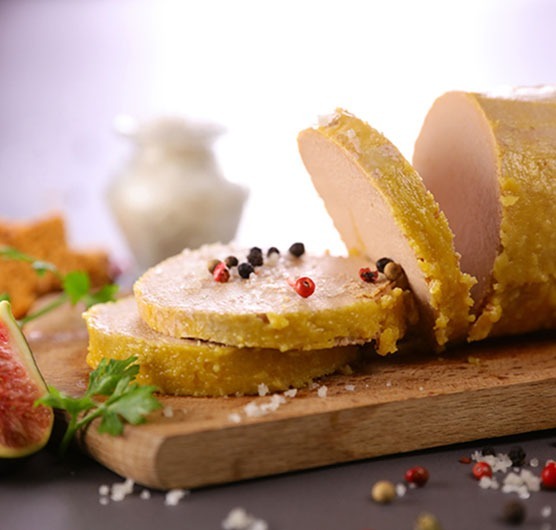
Best for: Sliced service, elevated plated appetizers
Foie Gras Torchon is a classic French preparation where foie gras is gently poached, wrapped, and chilled into a cylindrical shape. Gourmand’s torchon format delivers this traditional preparation ready to slice and serve.
Applications:
- Sliced with brioche, fruit, and finishing salts
- Elegant plated starters
- Wine-pairing menus
Real Menu Application Examples:
- Torchon with toasted brioche, quince paste, and fleur de sel
- Chilled foie gras torchon with Sauternes gel and compressed pear
- Torchon plated with duck consommé and shaved black truffle
- Foie gras torchon as part of a luxury charcuterie program
Torchon is ideal for chefs who want to showcase traditional techniques while maintaining kitchen efficiency.
Selecting the Right Foie Gras Format for Your Kitchen
Choosing the right duck foie gras format for your needs comes down to three key considerations: Service model, labor availability, and presentation goals.
1. Service Model
- À la carte restaurants: IQF slices or whole deveined lobes for flexibility and freshness
- Banquets and catering: IQF cubes or Grade B lobes for efficiency and cost control
- Quick execution menus: Mousse or terrine for immediate use
2. Labor Availability
- Limited labor: Ready-to-use formats like mousse, terrine, and torchon
- Skilled team: Whole deveined foie gras for custom preparations
3. Presentation Goals
- Classic and refined: Terrine or torchon
- Modern and creative: IQF cubes for integration into sauces and components
- Bold center-of-plate: Seared slices
Aligning format with these factors ensures smoother execution and better overall results.
Managing Yield and Food Cost with Duck Foie Gras
In professional kitchens, selecting the right duck foie gras format can improve both operational efficiency and food cost control.
Key considerations include:
- Rendered fat loss during searing: Proper portioning and controlled cooking help minimize excess fat rendering and maintain consistent plate presentation.
- IQF waste reduction benefits: IQF cubes and slices allow chefs to thaw only what’s needed, reducing spoilage and improving inventory control.
- Labor savings from deveined products: Pre-deveined foie gras eliminates time-intensive fabrication, helping kitchens reduce prep labor while maintaining consistency.
- Portion consistency impacts: Uniform cuts support accurate costing, consistent plating, and more reliable execution during service.
By aligning foie gras format with kitchen workflow and menu goals, chefs can maximize yield without compromising quality.
Building a Cohesive Foie Gras Program Across the Menu
In many professional kitchens, foie gras isn’t limited to a single dish. It’s used strategically across multiple courses to maximize both impact and product utilization.
A well-designed menu might incorporate several formats:
- Seared IQF slice → Entrée
Delivers consistency and speed for high-value, center-of-plate applications. - Torchon → Appetizer
Offers a refined, classic presentation with minimal prep. - IQF cubes → Sauce enrichment
Enhances depth and richness in composed dishes or accompaniments. - Foie gras mousse → Amuse-bouche
Provides an accessible, ready-to-use option for opening bites or small-format service.
By leveraging multiple formats, chefs can create a cohesive foie gras experience across the menu while optimizing labor, reducing waste, and maintaining consistency at every touchpoint.
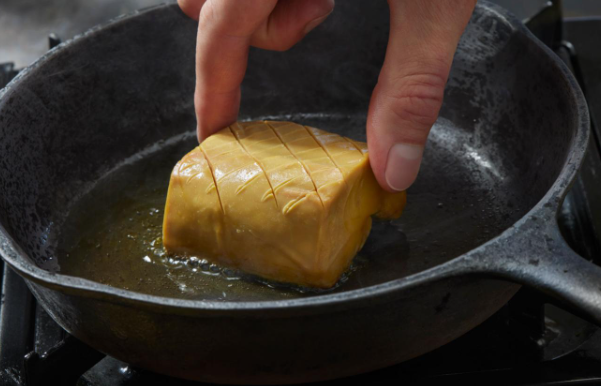
Handling and Cooking Foie Gras: Professional Tips
Executing foie gras successfully requires precise temperature control, moisture management, and timing. These techniques help maintain structure, minimize fat loss, and deliver a refined final presentation.
- Temper before searing: Allow foie gras to temper in the refrigerator for approximately 10–15 minutes before cooking. Slight tempering promotes more even heat penetration while helping the lobe maintain its shape.
- Use a very hot dry pan: A carbon steel or cast iron pan is ideal. No additional oil is necessary, as foie gras will render its own fat almost immediately.
- Score lightly for controlled rendering: Lightly scoring the surface in a crosshatch pattern can help encourage even rendering and caramelization without compromising structure.
- Monitor internal temperature carefully: For seared applications, target an internal temperature around 115–120°F to preserve a custard-like center while avoiding excessive fat loss.
- Manage surface moisture: Pat foie gras dry before cooking to improve crust development and reduce splattering during searing.
- Rest before plating: Allow foie gras to rest briefly after cooking so rendered fat redistributes and texture stabilizes before service.
- Balance richness with acidity: Foie gras pairs especially well with acidic and fruit-forward components like gastriques, pickled fruit, stone fruit, or Sauternes reductions to create balance on the palate.
- Match the format to the application: Cold preparations like torchon and terrine emphasize texture and nuance of seasoning, while hot applications highlight caramelization and richness. Selecting the right format helps optimize both execution and presentation.
Bring Precision and Consistency to Your Foie Gras Program
Whether you’re building a tasting menu, banquet program, or signature appetizer lineup, Gourmand’s duck foie gras formats help streamline execution while maintaining premium presentation.
Explore the Gourmand duck foie gras portfolio to find the right fit for your kitchen.
Duck Foie Gras FAQ for Professional Kitchens
What is the best duck foie gras format for searing?
IQF foie gras slices are ideal for searing because they provide consistent portioning and even cooking, making them reliable for high-volume service.
What temperature should foie gras be cooked to?
For seared foie gras, chefs typically target an internal temperature of 115–120°F. This range helps maintain a smooth, custard-like center while minimizing excessive fat rendering. Because foie gras cooks quickly, high heat and short cook times are essential for developing caramelization without compromising texture or yield.
What’s the difference between Grade A and Grade B foie gras?
Grade A foie gras offers superior color, texture, and yield, making it ideal for plating and premium applications. Grade B foie gras is more cost-effective and better suited for emulsified or large-scale preparations.
Can you cook foie gras from frozen?
For best results, foie gras should be thawed under controlled refrigeration. IQF formats allow chefs to thaw only what’s needed, preserving quality and minimizing waste.
What is the easiest cooking foie gras format to use in a busy kitchen?
Foie gras mousse and terrine are the most convenient formats for a busy kitchen, as they are fully prepared and require no additional fabrication.
How do you prevent foie gras from melting during cooking?
To prevent melting, keep foie gras well chilled before cooking, use a very hot pan, and limit cook time to develop a crust without over-rendering fat.